


The most feared villains in all of Skylands, Kaos and his partner in crime The Lost Queen! Dare to ask them questions, their mischievous children Havok and Hysteria, and explore an alternative take on Skylanders!
OOC : Nah, they can change their eyes too. Yahvii was simply cocky with her abilities. Kind of how Niko was able to find her in Warfang x,D

B-day Gift : Scarf of the Gods
“There are tales of a mighty dragon who braved the nest of the Yehkshir. With his majestic scarf, it is said that he swooned the evil Goddesses from causing him harm. Many have tried this feat but have failed, ‘twas only the impeccable charm of this hero and his trusty scarf that has ever walked away from the nest lavished in dark kisses.”
Birthday gift for @thornacious featuring Inbarrnán (Yehkshir believed to be responsible for giving Kuros the water ability), Yahvii (Feuriah’s mommah) and some random normal Yehkshir!
Hope you had a wonderful birthday you buttfart!
~Weird Hyenas, Mod


Lost Queen : Dyaw, you flatter me ❤
They’re of blood relation, it was thought that only the Yehkshir could produce offspring and not one egg would be blood related to another. In the case of your example, while the offspring would all be blood related to their dam and sire, they would be one breed or the other. Some would even be a different breed of the parents had different breed parents themselves.
Names aren’t too often gender-specific, males could be given female names and it wouldn’t seem ‘demeaning’ or ‘wrong’, as I’ve seen from other cultures. The name “Voteil” describes a more gentle dragon, but he did come from two powerful dragons who fought more often than got along; like the foam that appears from agitated waters.

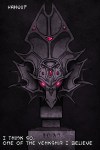
Lost Queen : I can’t recall all the Yehshir names, but I’m pretty sure that’s the name of one of them. The one with the bright pink gems, always found them quite pretty.
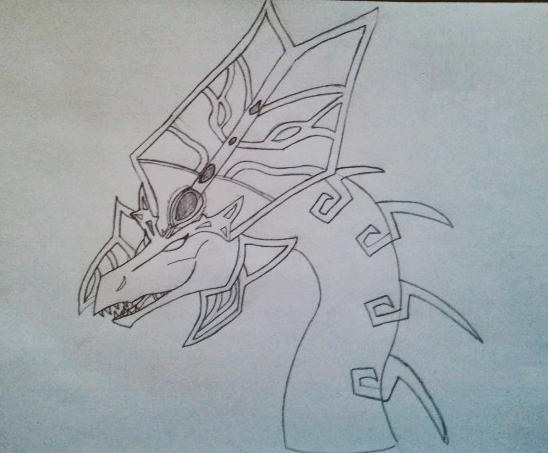
Attempt at one of Weirds Yehkshir =3
Kinda messed up the crest but um *Reaper noises*
http://weirdhyena.deviantart.com/art/Kurosian-Gods-The-Yehkshir-482682182
OOC : OOOOOOOOOOOOOOOOOOOOOOOOOOOOOOOOOOOOOOOOOOOOOOOOOOOOOOOOOOOOO I LURB THIS THORN AAAAAH
Jesus if they actually made the reaper noises I think every male dragon would just quit. I mean, BYUUUAAAAAAAAAM

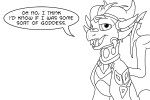
Lost Queen : I know I’m very awe inspiring, but I’m no goddess.


Lost Queen : Oh sure, these were some of the most interesting deities I studied, I really enjoyed them myself ^u^
Here’s the typical explanation of them –
The Yehkshir
There are fairytales of a shapeshifting dragon species within Kuros lore. The Yehkshir (yeh-keh-shire) were said to be the birthmothers of the Kuros as a species. They would disguise themselves as regular elemental dragons in order to find a desirable mate. Once found, the Yehkshir would then trick the male into breeding and then either kill them, or vanish to lay the eggs somewhere safe. There can only be female Yehkshir, and not all offspring end up Yehkshir. Most are born Kurosian, while one in 40 end up their mother’s species. None end up as regular elemental dragons either, although they may share their sire’s abilities.
These origin species have never been proven to exist, but instead live in fairytales and are often worshipped as Goddesses.
Our mother Goddess, or the Goddess of Love Mahoura, was said to be the very first Yehkshir. While we’ve never been able to prove they were real, unlike our other Gods, Mahoura once gave her people a description of them, and we carved statues and drew them off her descriptions. They were legend to be very large dragonesses in their natural form, some ranging from giants to as small as elephants. Those that did study their myth say that there were very few of them, possibly just a dozen, as they had constant hunters of light after them. We know nothing of these hunters of light either, and are just as much a myth as the Yehkshir.
They were also thought of as very agile, silent dragons. Stealthy, and precise. Their bones completely black, while their organs bright colors. Most depictions I see of Yehkshir show them as jet black with partially transparent frills/membranes, and glowing Bloodgems embedded in their skin. Usually black and red, but their secondary colors change. They don’t typically look much different, but then again, we’ve never seen them before. All we know of them are from Mahoura’s tales of them.
I wish I could provide more, but that’s all I know. I studied them, but more out of curiosity than a practice. I leave that to the priests and priestesses ^u^
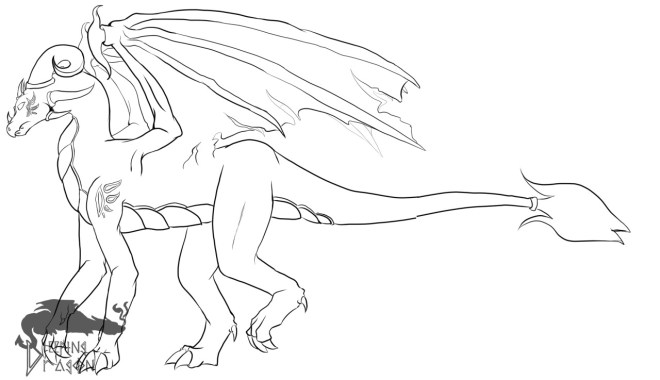
Yekshir © to WeirdHyenas
OOC : Daaaamn, that’s a kickass lookin Yehkshir 😀
 Weirdlanders